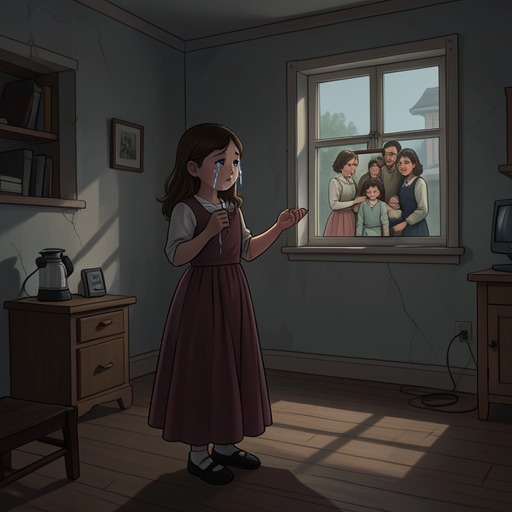
Empty emotional love tank
The Five Love LanguagesThe empty emotional love tank is a metaphor for the distress that develops when a person’s basic need to feel loved remains unmet. In Gary D. Chapman’s account, it offers a way to read marital withdrawal and conflict, as well as some children’s misbehavior, not simply as proof that affection is absent but as possible signs that love is not being received in a recognizable form. Its practical consequence is a challenge to identify and speak the other person’s primary love language; its larger claim is that emotional security can change the conditions under which families address their problems.
Definition and Emotional Effects
The metaphor begins with psychiatrist Ross Campbell’s image of an emotional tank inside every child, waiting to be filled with love. When a child feels loved, Chapman says, the child can develop normally; when the tank is empty, misbehavior may become a misguided search for the love the child does not feel. The image gives an emotional explanation to conduct that adults might otherwise treat only as defiance or wrongdoing.
Chapman extends the model from children to couples. He proposes that painful behavior between spouses—including withdrawal, harsh words, and a critical spirit—may occur when an invisible emotional love tank is empty. The metaphor does not make every action loving or excuse every harmful behavior. Rather, it supplies an interpretive question: could the behavior reflect a failure to feel loved, and could a more responsive expression of love help make repair possible?
The state is described less as an absence of love in the abstract than as a lived sense of emptiness and pain. When the tank is low, a person may have no loving feelings toward a spouse, even while the relationship’s deeper need for love remains. The distinction matters: painful feeling is presented as a consequence of unmet emotional need, not conclusive evidence that affection could never return.
How the Tank Becomes Empty
In Chapman’s account of Brent and Becky, the tank’s decline follows a recognizable course. They had an exciting courtship, married during the height of the “in love experience,” made the ordinary early adjustments, and pursued the American dream. When that emotional high subsided, they did not learn to speak each other’s love language sufficiently. Becky’s tank had been half full for several years; she had received enough expressions of love to believe all was well. Brent’s, by contrast, was empty.
The contrast shows why an apparently stable marriage may conceal different emotional realities. One spouse can feel partly sustained while the other experiences a prolonged shortage of love. Chapman’s explanation does not rest on a single dramatic moment: the tank drains when the ways love is offered do not meet the recipient’s primary emotional need, and the resulting distance may remain obscured until the relationship is already in crisis.
Chapman presents the “in love experience” as a temporary period in which the emotional need for love feels met. When that high passes, the tank will continue to be filled only if the spouses have learned to express love in one another’s primary languages. Otherwise, it slowly drains, and the person may again experience unmet need. Chapman connects this pattern to the possibility of falling in love with someone else after years of living with an empty tank; he does not treat the new emotional high as equivalent to the sustained work of meeting a spouse’s need.
Marital Conflict and the Possibility of Repair
The model also guides Chapman’s reading of Bill and Betty Jo’s conflict. Bill says that he wants Betty Jo and their children to share in what he is doing at work, and that it hurts when she criticizes the time he spends on the job. Chapman explains the conflict through a difference in love languages: Betty Jo’s is quality time, and the limited time Bill has given her has left her tank empty. On this account, she does not hate his job itself; she resents what it represents, the time she feels it takes from her.
The interpretation redirects Bill from defending his intention—he believes he is working for the family—to considering the effect on Betty Jo. The proposed answer is costly in a specific sense: he must make time for her and express love in the language she can receive. The exchange makes the tank a practical diagnostic tool, not just an image for sadness. It links a visible argument to a possible unmet need and names an action that might address it.
Chapman applies the same logic to Ann, who describes years of an empty tank and says that she and her husband never learned to speak each other’s love language after the early romantic high passed. She believes his tank is empty too. Chapman proposes a six-month experiment in applying the principle to their marriage. The account establishes the experiment as a proposed attempt to make the future different; the available passage does not establish its outcome.
Brent’s situation shows the stakes when the empty tank becomes entangled with a new relationship. He admits he has been in love with another woman for several months, hoped the feelings would pass, and found the situation at home worsening as his attachment increased. Chapman sympathizes with his conflict but distinguishes the emotional high of falling in love from the deeper need to feel loved. He explains the five love languages and challenges Brent to give his marriage another chance. The episode frames the empty tank as an explanation for vulnerability, not as a guarantee of reconciliation or a justification for leaving.
Children, Misbehavior, and Parental Communication
Chapman’s account of children likewise distinguishes parental love from a child’s experience of receiving it. Children may show the love language they themselves seek: a child who eagerly makes and wraps presents may be oriented toward receiving gifts; one who helps a younger sibling may point toward acts of service; and one who offers praise may indicate a need for words of affirmation. The child need not be consciously bargaining for a response. Chapman describes such behavior as shaped by emotional desire and experience, with children learning which actions tend to elicit particular responses.
If the emotional need is not met, Chapman says, a child may express anger toward parents and seek love in inappropriate places. He cites Ross Campbell’s clinical opinion that, in many years treating adolescents involved in sexual misconduct, Campbell had never treated one whose emotional need for love had been met by the parents; Campbell believed that almost all adolescent sexual misconduct was rooted in an empty emotional love tank. This is presented as Campbell’s professional judgment, not as proof that the metaphor accounts for every adolescent’s conduct.
A teenager’s running away illustrates the gap between parental intention and a child’s understanding. Parents may point to all they have done, while the teenager tells a counselor that the parents love a sibling but not the teenager. Chapman suggests that parents may sincerely love the child yet fail to communicate that love in a language the child understands. A purchased ball glove may express affection from the parent’s perspective, while the child wants someone to play ball with them; the difference between providing equipment and sharing the activity can be the difference between an empty and a full tank.
The model also cautions against applying the same expression of affection to every child. Chapman recalls that his son dismissed walking as pointless and preferred driving; quality time in the form of a walk was not that child’s primary love language. Forcing a child to join an activity intended as togetherness may therefore fail to communicate love. Recognizing distinct preferences is central to the metaphor’s practical use: care must be expressed in a form that can be understood, rather than judged solely by the giver’s sincerity.
Significance and Limits of the Model
Across these examples, the empty tank turns conflict into a question of interpretation. Criticism may point toward a felt shortage of time; withdrawal and harshness may accompany unmet need; a child’s conduct may be an attempt, however misguided, to find affection. The framework asks readers to look beneath the immediate behavior without declaring that all harmful conduct is loving or that a single cause explains every problem.
Its proposed remedy is relational and specific: learn the other person’s primary love language and speak it consistently. Chapman argues that when spouses’ emotional need for love is met, they can approach differences in a friendlier climate, seek to understand one another, and negotiate problems rather than allowing disagreement to divide them. By the same reasoning, when family members learn to communicate love in ways each can recognize, the emotional climate of the family can improve.
The metaphor’s force lies in its separation of intention from reception. Parents may love their children; Bill may believe his work serves his family; spouses may once have felt close. Yet those facts do not ensure that the person on the receiving end feels loved now. The empty emotional love tank names that painful discrepancy and makes it actionable: affection must not only exist but reach the person whose need it is meant to meet.